
Your COMMENTS Needed to Prevent Toxic Nickel-Copper Sulfide Ore Mining from Contaminating Nearby Wild Rice, Fishing Lakes, and Tribal Lands along with Downstream Waters!

Talon Metals and Rio Tinto are proposing to construct Minnesota’s first copper-nickel sulfide ore mine (Talon mine), an underground mine in what Talon calls a “massive sulfide mineralization,” in Northern Minnesota’s Tamarack area wetlands and streams. A massive sulfide mineralization means that the deposit has very high concentrations of sulfide and metals. This is one of the most water-rich areas ever proposed for a sulfide ore mine.
Every sulfide mine in a water-rich environment has polluted surface water and/or groundwater with acid mine drainage and/or toxic metals. That’s a track record of 100% failure to protect water.
Talon mine pollution and wetlands destruction would contaminate drinking water, contribute to algae blooms, and harm wild rice beds, fishing lakes, and Tribal lands and waters just a few miles away. Effects of mercury contamination of fish and release of excessive nutrients would affect downstream waters in the Mississippi River and, if the mine expands, the St. Croix River as well.
Comment Deadline for Talon Mine Comments: Sept. 14 at 4:30 pm. Comment now on a topic that is important to you.
Why is it urgent that you Comment on the Talon mine?
This is our only chance to tell the Minnesota Department of Natural Resources (DNR) what must be studied in EIS environmental review of the Talon mine. This process is called “scoping” the EIS.
If the EIS is inadequate, the public and affected Tribes won’t know Talon’s plans or the pollution and destruction they will cause until it is too late to avoid toxic harm to natural and Tribal resources and to human health. We won’t know how far Talon’s underground mine will expand, what wetlands will be damaged or dried up, or how the Talon mine will affect climate crisis.
What is the best way to Comment?
- Preferred by DNR: Draft your comments and upload them using DNR’s form. Comment by 4:30 pm on Monday, September 14. Be sure to begin your comments with a personal statement of your concern regarding the potential damage this mine may cause. This will mark your comment as unique. Feel free to draw from the talking points or the template comments below. CLICK HERE to open the DNR comment form. Drop down instructions from our team are below.
- Simplest Option: If you sign any or all of the Comments at the bottom of this page, we will compile them, deliver them to DNR, and upload them using the comment form. If you use this option, our deadline is 9:00 am on Monday, September 14, to give us time to make sure your comments get to the DNR.
Step-by-Step Guide to Submit a Comment on the DNR Form
- Click “Submitted by,” and select “Individual” in the drop-down menu (unless you are submitting on behalf of an organization – then select “Organization”
- Fill in contact fields: First Name, Last Name, Address, City, State (Minnesota is pre-marked, but you can select your own state), ZIP Code, Email address.
- Write your comment: Include 1) something about where you live or your reason for commenting; 2) one or more concerns about the Talon sulfide ore mine; and 3) something that you want DNR to require for the EIS
- Use the Talking Points or Comments on this page as a starting point if you wish. Helpful Tip: We recommend drafting your comment in a Word or Google Doc first so your comment won’t be lost if the form glitches. You can copy and paste the text into the “Your Comment” text box, or upload (see #5 below).
- Paste your comment into the “Your Comment” text box or write “Comment from [YOUR NAME] is attached.” You can attach your comment in Word or pdf and upload up to 5 files
- Click “Continue” to move to the review step.
- Review your submission on the confirmation screen to make sure everything looks right. If it doesn’t look right, click the “Edit” button to go back and make changes.
- Once your comment looks the way you want it to, click “Submit Comment.” Once submitted, you’ll receive a copy of your comment. It will become part of the permanent public record for this comment period.

- Please send us a note so we know you’ve been able to submit your comment successfully. Email Sophia Patane, sophia@waterlegacy.org
Talking Points for Your Comments – Specific Concerns about the Talon Mine and Requests for Analysis in the EIS
Talon Mine Perfect Storm for Toxic Mercury Methylation
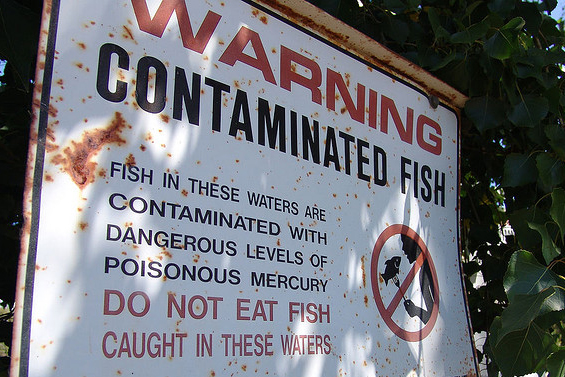
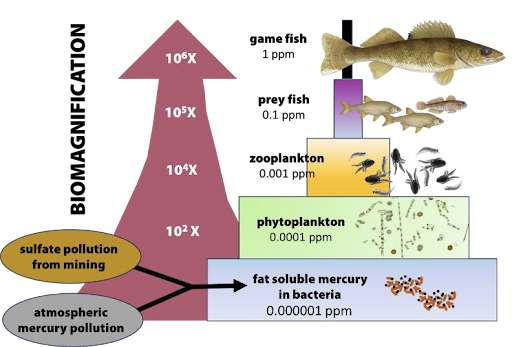
The Talon copper-nickel mine would excavate and dewater peatlands and wetlands (releasing mercury), discharge sulfate and mercury to the water, emit dust containing sulfide, and burn diesel and propane containing mercury. These factors create the perfect storm to increase mercury contamination of fish.
Waters near the proposed Talon mine currently have low sulfate, so any addition of sulfate would increase mercury methylation and bioaccumulation in the food chain. Just a few miles away, Big Sandy Lake, Lake Minnewawa, and Round Lake are already impaired due to excessive mercury in fish, as are many downstream segments of the St. Croix River. Tribal members, cabin owners, and rural and urban residents rely on plentiful fish that is safe to eat for nutrition, culture, and their way of life. Methylmercury is toxic to fish, wildlife, and to the developing brains of children and of fetuses and infants whose mothers have eaten mercury-contaminated fish.
Needed for EIS:
- Baseline information on current chemicals in wetlands (including mercury, methylmercury, sulfate, and sulfide).
- Baseline information on sulfate in the water and sulfide in sediments in lakes and streams near and downstream of the Talon mine.
- Information on existing hydrology and how it would be changed by the Talon mine project, especially by dewatering during construction and operations.
- Analysis of how dewatering and rewetting of wetlands would be affected by drought, floods, and extreme rains related to climate change.
- Information on the volume of mercury and sulfide that would be emitted from crushing and loading of Talon ore and waste rock and by burning diesel and propane.
- Information on the mass and concentrations of mercury and sulfate in any waters that would be released from the Talon mine— including stormwater, construction water, mine contact water, and treated water.
- Information on the location(s) and volume of mine impacted water, treated or untreated, that would be released from the Talon mine.
Comment here by Monday, September 14 at 9:00 am so we have time to download and submit your comment to DNR.
Click Here to Comment: Talon Mine Perfect Storm for Toxic Mercury Contamination
Pollution and Dewatering Harm to Wild Rice
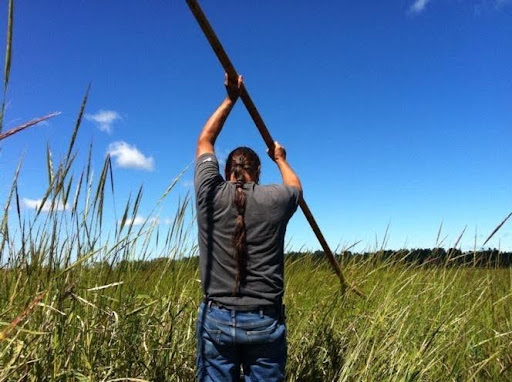

The Talon mine would damage some of the most abundant natural wild rice beds in the United States, located just a few miles downstream of the mine. Both Tribal and Non-Native harvesters of wild rice come to these rice beds from across Northern Minnesota. Talon mine pollution and mine dewatering both have the potential to degrade and contaminate wild rice.
Sulfate levels are low in Aitkin County wild rice lakes, and any increase may diminish wild rice abundance. The Talon deposit is a “massive sulfide mineralization” and water contacting waste rock or ore during construction and mine operations is likely to contain high levels of sulfate, conductivity, and toxic metals. Sulfate and conductivity impair wild rice, and other mine chemicals–like arsenic–can make eating wild rice unsafe.
Dewatering during mine construction and operations could alter the hydrology that sustains wild rice. Talon’s main mine tunnel will be built in a peat bog, requiring substantial dewatering. Talon estimates that peak dewatering during the years of mine operations would be 180-350 gallons per minute (gpm), or about 3.5 million gallons per week. (Talon EAW July 2026). Dewatering can draw down and dry out wetlands and wild rice beds even if the water is taken from bedrock, since surface waters and deep and shallow aquifers are connected.
Needed for EIS:
- What are baseline conditions for wild rice, including abundance, sulfate in the water, and sulfide in sediments?
- How much sulfate, conductivity, and metals would be in mine construction water, stormwater contacting mine facilities, and mine inflow and how much of each type of water would be produced?
- How much of these types of mine-related waters would be produced and how would they be stored and treated before release?
- Where would any treated or untreated mine-related water be released to wetlands, ditches, or other surface water?
- How would treated and untreated mine-related waters compare to all state and federal water quality and health standards, including rules against toxicity and degradation?
- Where are faults, fractures, or any other conditions in the rock that would result in higher mine inflows and more dewatering?
- DNR should require Talon to share with experts for Tribes and the public the models and assumptions used for the EIS to calculate levels of chemicals or dewatering that would result from its mine.
- DNR should require that the EIS evaluate alternatives that would reduce dewatering and drawdown from the Talon mine.
Comment here by Monday, September 14 at 9:00 am so we have time to download and submit your comment to DNR.
Click Here to Comment: Talon Mine Pollution and Dewatering Harm to Wild Rice
Talon Mine Incomplete and Unsupported Plan
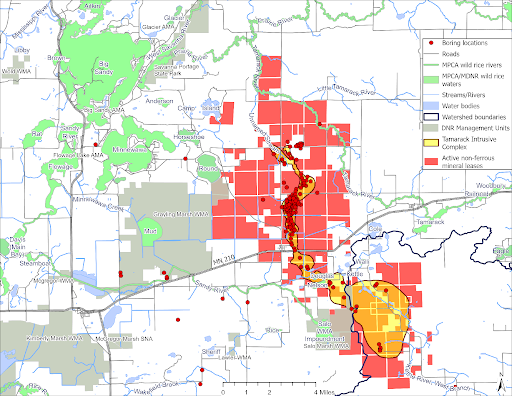
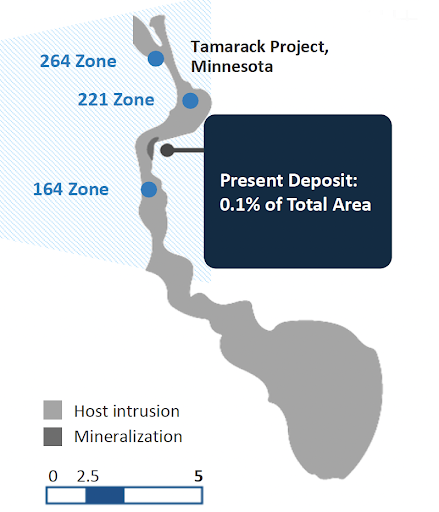
Talon Metals has control of 31,000 acres of mineral leases and has drilled more than 550 boreholes in its 11-mile Tamarack mineral deposit. Talon has disclosed that the “Present Deposit” is only 0.1% of the total area of mineralization. (Talon, Moving Forward June 2022). Yet, DNR is proposing that the EIS will only analyze environmental harm from the small site, not the massive “district scale” mineral resource Talon has promoted. (Talon, Moving Forward, Jan. 2025).
Other draft decisions about what to study in the EIS also minimize the consideration of environmental harm. Talon’s plan to transport ore and waste rock from Tamarack, Minnesota to North Dakota or Michigan for processing and tailings storage would not be analyzed in the EIS. The conceptual “mine-in-a-box” concept that Talon proposed for the EIS assumes all mineral handling would be contained inside a building, further reducing environmental harms that must be considered.
Talon recently emphasized in discussing its plan to put all surface mine facilities in one building: “The Tamarack Nickel Project does not contain reserves, and no production decision has been made. This conceptual design is preliminary in nature and is not supported by a prefeasibility study, a feasibility study or any other form of engineering study or report. The economic and technical viability of this conceptual surface design has not been determined. It is uncertain if the project will be built.” (Talon Corporate Presentation June 2026)
It is irregular to limit an EIS to only one-tenth of 1% of a known mineral deposit. It is abnormal to start an EIS when an operator tells investors that it is “uncertain if the project will be built,” that the mine has no reserves (analysis of whether the costs of the mine are supported by market prices), is not supported by a prefeasibility study or engineering reports, and has no plan for processing ore or tailings disposal, both of which are required under Minnesota mining rules. These gaps create the risk of stranded ore and waste rock or a bait-and-switch, where Talon “discovers” that only a larger mine with different methods is feasible or profitable.
Needed for EIS Process:
- EIS scoping should be delayed until after Talon releases its prefeasibility/feasibility report.
- At a minimum, EIS scoping should be reopened for additional public comment and DNR consultant review of all issues after Talon releases its new prefeasibility/feasibility report.
- The EIS analysis should be prepared for a project scope that more accurately reflects the full geographic location of Talon’s mineral reserves and plans, not an artificially small project.
- The EIS should include cumulative impacts analysis of the effects of exploratory drilling on water quality and wetlands throughout the Tamarack Intrusive Complex.
- The EIS should evaluate the feasibility and environmental, and climate impacts of Talon’s ore processing and tailings disposal alternatives in North Dakota and Michigan.
- EIS analysis of economic impacts of the proposed project should reflect the increased risks of temporary or permanent shutdown due to costs and challenges of remote processing and waste storage
Comment here by Monday, September 14 at 9:00 am so we have time to download and submit your comment to DNR.
Click Here to Comment: Talon Mine Incomplete and Unsupported Plan
Additional Resources
CLICK TO SIGN OUR PETITION FOR THE “WHOLE TRUTH”: Full Disclosure in Talon Metals Environmental Review
DNR WEBSITE PAGES
DNR Project Page for Tamarack Mining Project Environmental Impact Statement
Draft Scoping Decision Document – July 2026
Scoping Environmental Assessment Worksheet and Figures – July 2026
SLIDE PRESENTATION
WATERLEGACY FACT SHEET
Fact Sheet: Talon EIS Comment Period—Why Your Voice is Needed
WATERLEGACY RESOURCE PAGES
Wild Rice (Manoomin) in the Tamarack Region
Talon Metals/Rio Tinto Tamarack Nickel Sulfide Ore Mine: Threat to Mississippi and St. Croix River Watersheds
AUGUST 5 MCGREGOR PUBLIC MEETING COMMENTS
Mike Maleska, Hibbing, MN – “Minnesota does not not enforce environmental regulations on taconite mines…”
Michaa Aubid, Minisinaakwaang / East Lake, MN – “Great nations, like great men, should honor their word.”
Curtis Jackson, Minisinaakwaang / East Lake, MN – “I do not stand here alone.”
Leanna Goose, Leech Lake Band of Ojibwe – “We cannot afford to poison Anishinaabe homelands.”
Don Arnosti, Downstream Resident – “This is a bait and switch.”
Lise Abazs, Finland, MN – “Thank God for wild rice…”